This is a blog post that goes along with the most recent bonus pod! You can listen to the first 15 minutes of the bonus pod below, but you’ll have to subscribe on Patreon to get the RSS feed of the full episode (as well as access to our Discord).
I find it a bit funny that Inception is the subject of this post. If memory serves, this might be the first time we’ve covered a contemporary film not set in a specific time period. It’s not that contemporary films are “bad” for style, but we generally don’t find their attire all that interesting; they also seldom feature tailoring or elements of classic menswear in general. That being said, Inception has always held a special place in my heart.
At the time of Inception’s release, I was a little 13-year-old who had really only watched modern comedies and action movies with the occasional pop culture nerd films courtesy of my parents (Star Wars, Back to the Future, Indiana Jones). Nolan’s sci-fi heist was unlike anything I had ever seen. It was sleek, snappy, and grand, but not in a wizard/fantasy or space opera way. It was long, but paced well and easy to follow, at least as much as my tween brain could. I really had no idea that movies could be like this. While I was already a fan of movies and fancied myself a filmmaker, I am certain that introspecting hard on this film in particular (and rewatching it countless times) was formative in my taste for movies as well as how I approached watching/consuming in general.
One thing was clear– Inception was not a style movie for me. Granted, at the time, I wasn’t even really into fashion or wearing a cool outfit at all. At most, I wore a suit to church, and once the services were over, I immediately changed into graphic tees and plaid shorts, attire I couldn’t wear at school because we had a uniform requirement. However, I do remember being a bit taken with Dom’s look during the hotel dream sequence, which led me to wear it to church a few times– and even prompted me to ask my dad for one of my first ever sartorial fit pics. But that was all. That’s why it’s really funny that we’re even talking about this movie today.


If there was anything from Inception that tween Ethan was obsessed with, it was Hans Zimmer’s score (to the surprise of absolutely no one).
With its minimal approach and droning brass (signaling an upcoming “kick”), the music was radically different from both the symphonic scores I enjoyed (John Williams, Alan Silvestri, Jerry Goldsmith) and even the Zimmer scores I was already intimately familiar with (Pirates, Kung Fu Panda), though a learned listener will likely feel the common DNA with the two Batman movies he had already scored for Nolan.
The music isn’t as abstract as one might think. Unlike the modern scores in Tenet (a Nolan film scored not by Zimmer but by Ludwig Göransson) and Reznor and Ross’s work on The Social Network, whose cues are largely vibe-based and not thematically driven, Zimmer uses a proper leitmotif approach, or at least uses recurring melodies tied to story beats and themes. You could be forgiven for thinking otherwise, as the officially released soundtrack is presented as a collection of suites edited together from various cues(think of it like a concert presentation for an easy listening experience) instead of chronological, scene-by-scene music (as John Williams or Michael Giacchino does). A glance at Hans-Zimmer.com provides you with just how many cues were written for the film– and allows you to see how the handful of themes weave from scene to scene based on the story’s needs (as well as how the cues were edited for album presentation).
For example, the four-chord progression people think of as “Time” is associated with Dom and his estranged children, with dissonant versions opening the film and popping up when discussions of Dom’s issues come up or when projections and memories of his past life flash on screen; it’s only when he passes through immigration that we get the theme in full glory. It also goes without saying that the score version is heavily different from the album presentation.
“The Dream is Collapsing” (also known as the “F Riff”), a piece which basically signals when shit is going down. As a result, it occurs in quite a few cues (but in the album it shows up again in “Dream Within A Dream”, solidifying its status as an actual leitmotif. It’s also built on a four-chord progression, but one that is darker, not just in its melody but thanks to Zimmer’s trademarked string ostinatos and blocks of brass emphasizing the minor chords. The suite also contains Zimmer’s take on the brass found in Non je ne regrette rien, albeit slowed down due to the time dilation of the dreamscape; the progression is different from the main idea in “The Dream is Collapsing”, but it feels a part of the same DNA, functioning as both score and diegetic music.
For a few action sequences not related to the stability of the dream, Zimmer utilizes “Mombasa”, an intense percussion-focused cue (built on a bopping rhythm that calls to mind aughts club music), that also features synth string ostinato and yet another chord progression as well as a guitar riff. [Side note, you should watch Zimmer and pals play the piece live. It’s not as dark as “Collapsing”, but it feels like a part of the same world, which allows elements of “Mombasa” to be used in other parts of the film. What’s interesting is that it’s first heard in the film during the non-dreaming setting of the film, when Dom runs from Cobol’s agents in, you guessed it, Mombasa. I guess Zimmer and Nolan just liked how this riff worked in the other action scenes (like when they flee from Fischer’s projections in the first dream level).
Overall, Inception’s score is driven by a variety of recurring riffs/ostinatos (played by Johnny Marr on guitar) that are associated with planning the heist, introspection/memories, and general dream-antics. It is quite different from the jaunty jig associated with Jack Sparrow, the vibrant strings for the escaped Zoosters in Madagascar, or the detuned honky tonk piano and dulcimer combo for Sherlock Holmes. But again, it’s decidedly not droning tones played on synth– Zimmer employs actual melody, as simple as they are. You have probably noticed by this point that the entire score is basically “guitar riffs layered with strings ostinato and brass”. It is here that we get the “Inception sound” that I latched onto and the approach that Zimmer would later develop into for future scores like Rush and F1: The Movie (the chord progression is very “Time”-esque) , and if we trade guitar riffs for organ ostinatos, Interstellar. Zimmer wouldn’t delve into being truly “abstract” until Dunkirk, Blade Runner: 2049, and some of the stuff in Dune.
Perhaps one reason I enjoyed the Inception score is that it feels very “aughts alt/indie rock”; it even sounds a bit like Death Note. One example is the riff in “One Simple Idea”, which gets its own action treatment at 3:19 in “Don’t Think About Elephants”, a cue that occurs not in the scene where the line is spoken; that cue also has yet another treatment of “Collapsing”. In other words, listening to Inception was a way for me, a film score guy, to feel a bit “cooler” as a teen.
Of course, apart from “Collapsing” and “Time”, the most memorable themes from Inception, there is one last piece of music that is cemented in the mainstream subconscious and that changed cinema music (as well as trailer editing) forever: the infamous “braaam” (a good article about the phenomenon can be found here).
It is true that the first teaser for Inception used a braaam; it wasn’t until Trailer 3 that the effect was codified. Indeed, Trailer 3 was the final trailer for the film (and had a lot of play internationally), so this makes sense. However, the music in Trailer 3 was actually not adapted from Inception’s score but was simply a track by Zack Hemsey, a trailer composer; the teaser music was also not Zimmer, but Mike Zarin. Again, you could be forgiven for thinking either of these was done by Zimmer, especially as Hemsey’s “Mind Heist” is a fully composed piece that embraces the Zimmer approach (repeated strings, brass chords), making it seem like it is indeed a part of the Inception soundscape.
In reality, Zimmer, or rather his co-composer Lorne Balfe, actually did have a “braaam” before Trailer 3. The official Zimmer version is found in Trailer 2 (music only here). Not only is this piece officially listed on Hans-Zimmer.com, but the music, both the “braaam” and the descending string ostinato, actually has its basis in the official Inception score. Trailer 2’s music is essentially an epic, trailer-ized version of “528491”.
It is usually quite rare to have an official film score be used in trailer music, as the score is the final element to be completed, thanks to the amount of last-minute edits and cramped schedules in modern filmmaking. I always felt bad for Zimmer (and his co-composer Lorne Balfe) for not getting their flowers for the trailer “braaam” sound; the damn brass came from the score’s composers and not some agnostic/generic trailer music!


As you can see, the Menswear of Inception was the last thing on my young mind. Outside of that singular Dom look (which will remain an all-timer for me), I never felt the need to pay the clothing a second glance. Hell, I didn’t really rewatch the movie for a long time; after all, everyone I knew had seen the film. We all agreed it was good, so why throw it on when there are other things to watch?
Yet, here we are. As you likely remember from the cold open on a previous pod, the guys and I randomly looked up Inception and were surprised by just how interesting the attire was. Not only that, but it seemed that each character had their own distinct styles; I guess I just assumed everyone wore plain suits and dress shirts, making it no different than, say, any movie “professional attire”. Am I seeing Arthur in a 3PC suit with a DB? Is that Dom in a 40s leather jacket? Is Eames wearing a French-cuffed linen sport shirt? Damn, the menswear might be good! We had to go deeper.
I actually appreciated this opportunity because Nolan isn’t really a director we watch for menswear. The guys and I had previously discussed Oppenheimer, which was good but a no-brainer– period dramas often have good outfits. But this was set to be an interesting case: a sleek heist with contemporary looks that feature combinations before the dreaded skinny suits, slim ties, and general minimalism of the 2010s. Inception was likely to be a fashion time capsule for its production year, but like North by Northwest before it, it was clear that Nolan and his costume designer, Jeffrey Kurland, strived to have a timeless look for their heist.
You know what? I think they succeeded. I’d even go as far as to say that I could (and would) make looks inspired by this film, all with things I already own. After all, I did dress like Dom all those years ago. Maybe it will happen again!


Even with all my Apparel Arts sensibilities, I find Dom’s tailored attire, specifically when he’s on the plane and in the second dream layer (the hotel bar), quite good.
They’re both quite similar on the surface, being a dark, single-breasted peak lapel suit, a cream pencil striped shirt, and a grey/silver tie. But when you look closer, you’ll notice there are some differences: the ties have a different pattern (twill vs a diagonal geometric) and the dream suit appears to be solid while Dom’s IRL suit is multistriped. But in any case, the effect is the same. The combinations expressing an attitude that is business-appropriate, but also skews formal and elegant, hinting that Dom (or the “character” he is portraying) is a man of means and leisure who would be in the first-class cabin on an international flight, as well as the security expert manifested from your trained, anti-mind theft subconscious. It’s sleek, but not too flashy– a perfect look for an Extractor in the world (or dreams) of corporate espionage.
I think I was drawn to Dom’s look because the use of stripes and grey/silver (which are patterned) simply made the outfit exponentially more interesting than the typical black suit, white shirt, and black tie look (a la Reservoir Dogs and Pulp Fiction) that most people default to when wanting to be “fancy”. It’s a bit too plain and uniform-esque, whereas Dom’s look comes off as refined. Too many solids just isn’t my job.. After all, I did suggest a look similar to Dom’s for Scott’s Wedding (navy suit, white shirt, grey checked tie). It’s a good combination!
When Dom is off the job, he still dresses quite nicely, albeit much more casually. We could call it “business casual”, but he still comes off as smart, a far cry from the khakis and gingham shirts that we attribute to the office now. Dom wears sport coats, taupe trousers, and a variety of button-ups. The dark browns (worn with a black or navy jacket) and muted greys (one is flannel) sans tie feel quite aughts but in a charming way due to their subdued palettes (it also reminds me of Frasier in the later seasons). I particularly like the dark green plaid shirt that he wears when fleeing Japan. In essence, Dom is our brooding protagonist, a contrast to say, the overly confident Danny Ocean, who I mainly remember wearing open white shirts with his jackets.
Again, maybe it’s the Frasier connection, but I found myself really liking those dark shirts and pant combos, as “basic” as they are. Should I start just rocking shirts and trousers sans jacket now? The nostalgia for pre-vintage Ethan is real!
Interestingly, Kurland also gives Dom a chambray shirt (which he pairs with a chore coat), a move that only reinforces the character’s “everyman” status in the group. Drawing from Americana is always a great choice when dressing a character. And for Dom, it just displays his versatility, showing his competence in dressing for the different aspects of his lifestyle. Of course, this begs the question– what would he wear once he’s back home and no longer has to steal? Maybe the outfits in limbo give us a hint: T-shirts and unbuttoned button-ups. Dom just wants to be a regular guy reunited with his family.


In an interview with Forbes, Kurland mentions that the rest of the team’s outfits all descend from Cobb. And when you watch the film, you can see it. Everyone is dressed up, all wearing sport coats (or suits), trousers, and button-ups, just like Cobb– this is a professional team that takes their job seriously. But that doesn’t mean they all dress the same. No, each member of the team has their own distinct style– and they look great!
Arthur, the Point Man and guy responsible for executing the play, has a style that plays up Dom’s tailoring side. In almost every scene, Arthur is “dressed up”, wearing striped shirts, patterned ties, and a jacket; he occasionally has some mid-layer like a sweater or waistcoat (a DB one when on the plane). The combinations are quite interesting and even playful, evoking what I would call “Canali in the late aughts” in my mind: a bit dated, but still far fun than the minimalism that would erupt in the 2010s. Arthur’s look isn’t exactly conservative business attire or traditional Apparel Arts, but the choices certainly make it seem that Arthur enjoys clothes– during the prep scenes, he’s got a tie on, even when Dom doesn’t.
I like that Arthur and Dom match more directly during the first dream layer, wearing brown leather jackets over Americana casual, styled in their own way: Dom has a dark, plain shirt (makes sense) with olive-grey cargos, while Arthur has a plaid shirt with grey chinos. It feels very “70s does 40s thug”, which to me looks a bit more “dressed up” than what you’d expect from the typical mercenary look (tac vests over polos). Perhaps Team Inception knew that Fischer’s subconscious would likely be a bit more “cinematically dressed”, though it is funny that Yusuf and Saito are in their IRL clothes, even when they show their face to Fischer. In any case, I really think Arthur and Dom look cool; I’m always a fan of a plaid shirt, leather jacket, and boots. I’m wearing that very combo as I write this blog post!


On the subject of dressing up, we have Eames. He functions as “The Forger”, the team member who disguises themselves as one of the target’s projections and helps maintain the ruse. Tom Hardy plays Eames as flashy and cocky (played exceptionally by Tom Hardy), and he’s got a bold style to boot. When we first meet him in Mombasa, Eames has a crazy outfit: light grey trousers (with a wallet chain), a slubby green jacket (that seems to have a teal pinstripe), and an amazing batik print, French-cuffed sportshirt (worn with a runaway collar). In other scenes, he goes full early 2000s rich guy sleaze by trading his sport shirt for a puce button-down with a giant rolled collar (do you guys remember when this type of shirt was popular?) and pairs it with yet another slubby cloth sport coat. Eames’s laid-back yet flamboyant attire contrasts sharply with Dom and Arthur’s conservative dress, but it balances them out. He’s shown to easily adapt when complications arise during the heist (and boy, are there a lot of them).
Rounding out the team is Yusuf the Chemist, who creates a specialized form of Somnacin (the dreaming drug) that allows them the depth and stability to accomplish inception. Stationed in Mombasa, we meet the quirky scientist in an old-world pharmacy decked out with shelves of vials and bottles. Yusuf’s attire matches his setting and character perfectly, wearing what seems to be a multistripe workshirt (complete with throat latch) with a U-closure waistcoat. In a cool move, his shirt is untucked, making it function almost like a kurta of sorts, its front sticking out under the vest. On top of it all is a linen sport coat, a move that perhaps shows that Yusuf has some Western proclivities; I’m sure that Team Inception isn’t the only corporate client of his.
Yusuf’s ensemble is slouchy and earthy, being almost like an “Eastern” version of 90s Armani, which I really enjoy. He later shows that he is just as comfortable in full tailoring as the rest of them, donning a business suit on the plane, before “reverting” back to his tonal linens in the first dream layer. Unfortunately, his warm-weather attire gets absolutely drenched simply because he just had to have some of that free pre-flight champagne before starting the heist. At least it didn’t get in the way of his epic driving!


I would be remiss if I didn’t mention the two true business guys in the film: Saito and Robert Fischer. Inception is truly a treat for us menswear-minded guys.
Ken Wantabe’s Saito is first introduced to us at a long dining table at a fancy Japanese estate, where he is entertaining a business proposal from Dom and Arthur (who are masquerading as dream security professionals) while throwing a black tie party. As the host, he is decked out in what may be one of the coolest takes on evening attire in “recent” film: a multi-pleated juban (or other kimono undergarment) as an evening shirt under a shawl collar tail coat. Like Yusuf, this combo exudes an East-meets-West attitude and looks incredibly cool; in a way, the combo harkens toward Safin’s look in No Time To Die. Overall, it provides Saito with an elegant, cosmopolitan flair that honors his background. Unfortunately, Saito only wears that look once, though this makes sense as it is occasionwear and not businesswear; the latter obviously coats the rest of the movie.
Saito certainly holds it down in the sartorial department, being dressed to the nines, at least in what we’d expect from a powerful industrialist in the aughts. He has a preference for SB peak lapel 3PC suits, which he has in both light and charcoal grey, adding to the formal attitude of his character. In another scene, Saito even gets to wear a DB 3PC! Like Arthur and Dom, Saito’s shirts are striped (he wears a solid lavender shirt on the plain), providing contrast to his geometric ties. Even though he’s likely one of the richest men in the world, Saito still takes pride in making an interesting and well put-together outfit. Perhaps that’s why he maintains his “uniform” during the first two dream levels. You gotta love consistency!
Robert Fischer is our unsuspecting and generally good-natured mark (at least in my headcanon), played by Cillian Murphy. He is dressed like a proper heir should be: sharp English-esque DB suits with the stereotypical cutaway collar (some are done the Winchester way, complete with a striped body) and a sleek paisley tie. Unfortunately, Fischer’s attire is the most dated thanks to the wide, triangular Full Windsor Knot, its size emphasized by the extreme cutaway of his collar. But as bad and indicative of the aughts/early 2010s as it is, he still looks quite good. It’s even an indication of what Cillian Murphy may have looked like if he was cast as Bruce Wayne in Batman Begins!
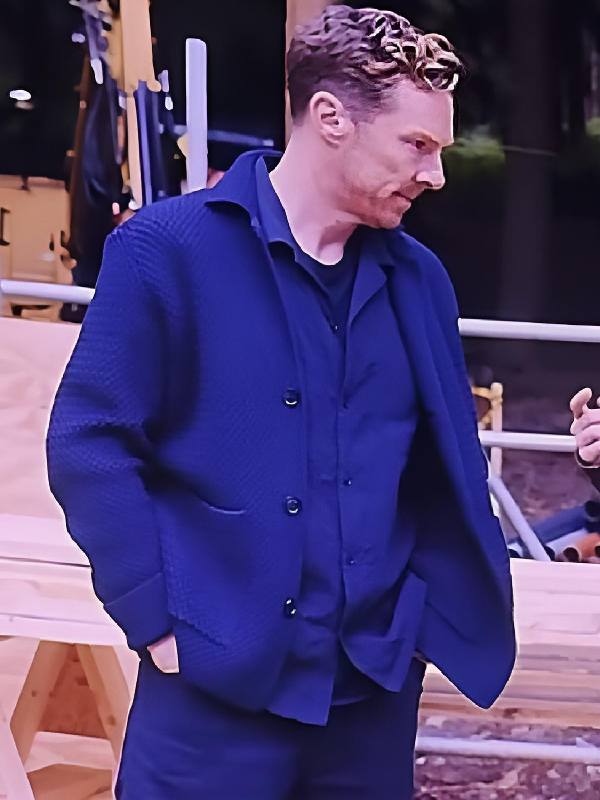
Like Dom, Saito, and Athur before him, Fisher balances being corporate and elegant all in one look, something that you don’t really see in current movies, which opt to dress their well-to-do guys in plain suits or something akin to a designer chore suit (see Benedict Cumberbatch in The Roses). Fashion marches on, I guess!

I’m really glad the guys and I randomly brought up Inception during one of our cold opens. It really was fun to revisit a movie that I was obsessed with when I was a tween! As I said at the top of the blog, this was one of the first “serious” movies I had ever seen. At times, this movie can feel a bit like “I’m 10 and this is deep”, but I find it quite endearing and certainly entertaining. Nolan made a sleek and snappy film that still feels exciting and tense, even 15 years later!
We don’t necessarily think about Nolan movies as being sources of inspo, let alone being considered a menswear movie (Tenet is just okay), but it’s clear that this film has a lot to offer! Nostalgia for the 2010s aside, I think the film is very well costumed, serving to express the characters as well as being generally good outfits! Like with Jaws, I could definitely frame my outfits with the prompt: “Which Inception character am I going to channel today?”.
Perhaps in the spirit of Nostalgia (a theme of the blog/pod as of late), I’ll recreate that old photo of me and wear a dark suit, white striped shirt, and a grey/silver tie just to be like my favorite tortured extractor, Dominick Cobb.
– end of blog post –


Thanks for listening and reading along! Don’t forget to support us on Patreon to get some extra content and access to our exclusive Discord.
The Podcast is produced by MJ.
Always a pleasure,
Ethan M. Wong (follow me on IG)
Big thank you to our top-tier Patrons (the SaDCast Fanatics), Philip, Shane, Henrik, Alexander, and Mason.
 a little bit of rest