
While I’ve enjoyed pushing for the non-pragmatic enjoyment of wearing clothes, the pursuit of self expression, and making a case for accomplishing both of these things through classic menswear, I’ve started to think about the barriers that prevent people from fully getting into it. And in most of my writing, I’ve posited that these barriers tend to be more social based. After all, we live in a world where it’s currently the best time to be into fashion; we also have more opportunities than ever to create our own context and dress in a way that isn’t necessarily related to our job.
I believe this is a good thing, especially since I’ve never dressed in a pragmatic or what most people would consider a nominally “appropriate” way. It’s finally “okay” for me to wear a suit and beret to a coffee shop or friend-hang and not be considered too weird (though I will always Stand Out no matter what I do, it’s just the feature of my own personal style/taste). Thankfully my friends believe this too and are empowered to execute on their own expressive goals when we hang out. It’s never about being formal but about dressing the way we envision for ourselves. And the best part is that we already have all we need to act on that vision.
I realize it may seem that I’m simply glossing over how money applies to this clothing hobby. Keen readers will know that I’ve already talked about this a few times on the blog, specifically in the one about if money is important for style (it’s not) and how we buy things (where you can see how careful we are with selecting what we buy). I still stand by what I wrote on those blog posts!
However, I felt it was pertinent to add more through this blog post that delves into most of my overall menswear philosophies and takes on the current state of menswear. Simply put, I belive that achieving a specific desired expression requires an investment. This investment can be monetary, time, or even a bit of social gumption. I do know most people tend to focus on money since that’s the one directly related to class and as a result, can lead to conversations on gatekeeping and it’s perceived elitism.
This philosophy is one of the central tenets to my entire approach of menswear. And honestly, this is nothing new. Just think about how good instruments, high quality music samples, or even tools all cost a lot yet result in helping creatives achieve their expressive goals. The act of putting your expressive achievements out there for the world to see also takes a mental and emotional cost. It makes sense that only those who really like this shit feel like its worth it; its not always pragmatic, at least in a min-max way.
This blog post initially started out as a defense of investment, but its clear that to do so needed a lot more. So that is why this blog post will touch upon everything: my views on menswear as a hobby, the importance of investment, and the promising present and future of the space.
I did it so I don’t have to write about it again…I hope. ¯\_(ツ)_/¯


Accepting Different Approaches To Clothing
I truly believe that there isn’t much gatekeeping (currently) around menswear, as thanks to the internet, the gate (if it exists) is wide open for all. The “rules” on formality and general fit that used to keep people out are now all out there to learn. Substacks, videos, and instagram accounts are dedicated to sharing everything else: inspo, niche brands, and philosophies. And again, with good clothing being much more accessible, it’s really about whether or not you want to do it. (That was basically a recap on my expanding menswear essay).
As such, I think it prudent to state some overall philosophies on dressing and elitism that I may not have written expressly on the blog before. It’s important for me to state these as they apply directly to the distinct approach of dressing (primarily) for expression.
Firstly, I need to iterate that I believe (and accept) that everyone has different goals within dressing. Some people get dressed to make a fit ( expression of taste) and some people dress to not be naked and fit into the most context possible without making waves. This isn’t a true dichotomy, as some people have some semblance of expressing “goodness” in their quest to not-be-naked, but this is usually solved with basic ideas and is overall, a secondary to their priority in fitting in (which obviously requires you to not make bold choices). I need to make this distinction because not everyone who wears clothes is playing the same “game” and therefore the “problems” of gatekeeping or elitism will be applied differently. Much of the conflict tends to involve people of different approaches who think they’re all the same since they are all wearing a sportcoat and OCBD. That’s a mistake.
Secondly, we should remember that the complexities and goals of our Expressive Challenges are usually relative to how far along we are in our journeys. I say this in order to provide some leeway for guys who are interested in fashion but are just starting out. They are definitely not solely pragmatic dressers but they probably aren’t at the “advanced” level where they can see the expressive nuances or the even the expressive merits of non-traditional garments or style moves/pairings. I don’t believe this makes them a bad dresser, unless they are being intentionally stubborn and not being aware of their expressive options or alternatives. I understand that menswear isn’t really a class, but think of it like any form of art where we learn from the past as well as the community and fellow “creators”.
Thirdly, this distinction also goes to show that much of the “goodness” of expressive outfits are an optional endeavor in life, which again makes this into a hobby. This is important because I believe that no one is entitled to be considered cool, just like not everyone is entitled to widespread enjoyment of what you create in music, writing, painting, or even your sense of humor. This is obviously much different from discrimination based on class, gender, or ethnicity that plagues our world today. It is not a heresy that you aren’t considered cool simply by buying clothes off of a mannequin at a popular store at the mall. But to be clear, most people who do that are just fine!
Not being “cool” isn’t the end of the world! I will never understand it when people try to combine social justice rhetoric to the social worth of dressing “cool or fashionably”, implying that the lack of wearing a “good” outfit (that can be recognized as such by others) is a fate worse than death. Such a mindset is used in favor of fast fashion (Derek Guy has pointed this out) and tends to form a social-pragmatic mindset that leads one to constantly keep up with the world to prevent themselves from being considered “irrelevant” and getting FOMO.
To be fair, I do believe that everyone should be able to accessibly acquire clothes that are made of high quality and can last them a long time. But that is a different topic from wearing clothes for expression or as a hobby, which will always take effort and time. Perhaps we can blame optimization culture for making people assume that they deserve the most amount of benefits for their bare minimum of work. Imagine if we said that about artists or musicians!
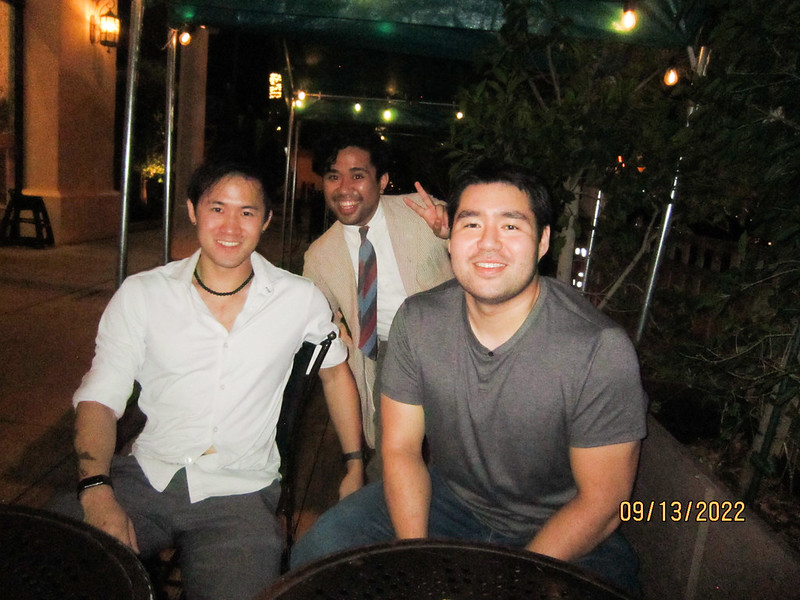
I also think it’s important to mention that a good, wholesome friendgroup will contain people who accept all manner of dress because they recognize that everyone has their own goals when dressing. At least that’s been the case for me (though my early years had a bit of strife from my circle).
It’s also important to note that while fashion should be inclusive, it doesn’t mean that we need to be overly poptimist to the point of compromising our taste. W. David Marx has written about poptimism, its issues, and how it relates to the different ways of enjoying music (similar to how there are different mindsets behind getting dressed). It’s a good read that probably explains my thoughts better than I ever could.



On Elitism and Looking Fine
On a related note, I do believe that there are a few true menswear elitists out there who focus solely on adherence to formality/rules, luxury make, and even specific brand names in order to keep people out of the “club” and give themselves some distinction. Almost all of these things are based on social pragmatism that seeks to uphold traditional status benefits through what I truly believe are arbitrary things. In other words, they truly want to make this about class.
I am against this. Even if I am against style as a social necessity (in that you must be fashionable to live), I still think that expressing personal style is something that everyone should be able to do. And when it’s done well, especially in regards to self-imposed challenges and awareness, they certainly deserve a spot at the menswear table. And even if we remove this progressive approach to menswear out of the equation, I find that those elitists often ignore the expressive merit of dressing. Even if they may dress similarly to me, we are not dressing for the same reasons.
On that note, it is perfectly possible to have a wonderful, fulfilling existence (with friends I might add) without being into clothes like I am (in fact, not being into clothes at all seems like a great way to live). What we need to understand is that people are actually totally fine and can look nice while shopping at the mall or your local big box store. You will be able to get by in life and do many social things enjoyably. Your outfit may not be in pursuit of nuanced POV, but that is an optional challenge. It’s a fun one, but it can be avoided quite easily if you aren’t into it. You don’t need to do something just because a bunch of dumb nerds on the internet said so– you don’t need vintage Levis or even BPH. You only “have” to have them if you like them!
I truly don’t believe that tailoring (especially my version of tailoring) is the objective best way to dress. I may enjoy it immensely, think its cool, and will always try my hardest to make a compelling case for someone to see its merit, but it doesn’t actually make me better than anyone else. We all just have different priorities! A Many of my friends here in LA (NYC is a different story) are not as into menswear as I am, but they are comfortable and happy in what they wear. It’s only when they decide to go further that the importance of expression (and details) starts to apply, similar to wanting to learn a sport, play an instrument, or create a cosplay. This whole thing should be a positive choice to opt into if you feel like it.
Because we have this agency, it’s always better to focus on our own expressive goals, free from social pragmatism and arbitrary elitism. And your expression is something worth investing in! After all, we do it with everything else: like buying high quality instruments to achieve the right sound or getting POSCA markers to bring your illustrations to life.
Plus, formality and dress codes (outside of special occasions and work) is a nebulous thing that people don’t always understand and doesn’t really matter anyways!


The Cost of Expressive Menswear
Now you’re probably wondering why good, expressive garments cost so much. Well as I’ve explained before, the problem is twofold. And honestly, it’s not really a problem but rather just the price of fair wages and keeping expression to live in a world that doesn’t prioritize it.
Firstly, Producing good quality clothing takes attention to craft and fair labor wages, which is reflected in the high price of the garments. This is a direct contrast to pragmatic garments that are usually made cheaply with high profit margins for the seller. The idea is that expensive garments aren’t always expensive for the sake of being expensive, but that the revenue is going directly to a high quality product. That’s obviously not always the case for every expensive fashion brand, but at least what I’ve seen in some smaller scale (non-holding company) brands, this is the case. We won’t truly know unless Drake’s or Ring Jacket or Wythe release financial statements (which would be good).
It’s important to note that quality garments end up being quite expressive. The use of organic cloth and good-make lend them to drape and age well, which is another key feature that is lacking from mall brands and especially big box stores. Cheap garments are not meant to do more than clothe your body with the minimum amount of baked-in “zeitgeist”. They end up looking flat and remain flat. However a high quality garment usually has some life to it which is often due to the materials and quality of make.
Life also comes from design, which is now the second aspect to this premium. Interesting, expressive details are not common and as a result, are not made in a way that can be reliably capitalized on. They are deprioritized and are lost save for the niche, specific brands or artisans that keep them alive. In some cases this can be about having shape to the lapel or some type of pattern in the cloth, but design can also be reflected in intentional use of proportions.
I do not think that quality and design are not details for the sake of details (an arbitrary thing to brag about) but instead, I believe these elements are expressive and directly help further someone’s goals. This is why details matter. When we look at mainstream or cheap items, it often feels like the garment’s expressive ability has been stripped from them in favor of something sterile that can “just get by”. And for those interested in the expressive properties of clothing, “just getting by” is not enough.
All of this is plays into why I’m a big fan of vintage, thrifting, and consignment, as they allow you to get a few of those expressive wants for a more accessible price. As I’ve discussed many times on this blog, pre-owned clothing is how I’ve built up 60% of my wardrobe; the rest is from affordable custom where I worked closely with my friends to make what I wanted. All of this takes time to achieve, but luckily none of this is required, so you can acquire an expressive wardrobe as slowly you see fit.
And yes, I realize that this section mainly addressed money. That’s because money is often cited as the true barrier to people’s participation in a menswear hobby. On the other hand, we will never be able to avoid putting in effort because effort will always be a worthy (and required) investment for things we enjoy. As I said earlier, we aren’t entitled to be stylish by buying things off mannequins we see or try things that the internet told us without any introspection. We still need to have personal taste, which will always require effort to develop.
Investing In My General Expression
Again, none of this matters for those who dress to not-be-naked or for those who need a suit because their dress code requires a “suit” and nothing else. But this is why this whole blog post is about those who want to have non-pragmatic fun with their clothes. We want more and that’s perfectly fine. Why? Because this whole thing is quite similar to other expressive interests.
While making an outfit is not exactly the same thing as painting, writing poetry, composing music, or taking a photograph, I believe that there are more than a few similarities. They all in some form or another constitute the making of an aesthetic-object that is built on our expression. And anyone who creates aesthetic objects of all kinds knows that it takes an investment in the equipment that helps bring your desired object to life.
Photography is a great example. Composition and being at the right place are free. We can also take cool photos (and edit them) with our smartphones (that most of us already have, thankfully). But for some people, their taste or expressive goals require more than what the free or cheap things can provide then. For the photos I wanted to take, I required more control over taking the photo than a cell phone or point-and-shoot camera (in the late aughts); those things simply did not grant me the expressive control I wanted. A DSLR with manual controls and accompanying lens that could go down to a lower aperture was what I needed and I recognized that those things cost more money.
All of these features could be considered luxuries, but they were a necessity for what I wanted to make. Yes, some things could be considered just for branding (I’ve often wondered if Leicas are actually worth it), but in the conversations I’ve had with photographs much better than I, it seems that good equipment allows them to capture things that they wouldn’t have been able to with less expressive pieces, at least in the way that they envisioned. It even seems that expressive tools even shows them new things, enhancing their approach completely.
Music is an even better analogy. Good instruments are obviously quite expensive, but when compared to cheaper ones, the good stuff produces better resonance and pitch, allowing you to more accurately and expressively play music. Luxury? Sure. Necessity for achieving the sound you want? Absolutely! It’s not to say that affordable instruments do not have worth, but that the further you get into art-making, the more complex your expressive goals are, which then necessitates a tool that can provide them for you. And this requires an investment.
I’ve found this directly pertinent to my hobby of composition. I realize that I can compose tunes on my grandmother’s piano. I also know that I can write them out for orchestra on a staff paper. But composing isn’t just about getting the notes down. It’s about producing the music to be heard. And this requires a good DAW and an expressive samples library. Free or cheap samples aren’t bad but they often aren’t able to produce the complexities of an orchestra. If you want to enjoy the music as a whole, you must be able to produce the sound the way you want.
When I first started composing, I was frustrated when people said my music sounded like a video game. It was because of the way my samples sounded. They couldn’t focus on the melodies or the orchestration because I was limited by the lack of expression from my samples. It was only when I was able to get a better sound library that people were able to properly understand what I was trying to do.
And to be clear, I wasn’t only upset about external reactions. I knew that just having the notes written wasn’t enough. I also wanted my music to sound as close as possible to what I could hear in my head. To take the “what if” and turn it into reality. This wasn’t possible with the basic samples. In that way, the investment was worth it to get music I was really proud of.


Investing In My Wardrobe’s Expression
Clothing is the same way, mainly when you dress in pursuit of a desired POV.
Sometimes the POV goal is simple and easily achieved; this is fine and good. But you may not be able to help it when you start to get a bit more specific and niche. That tends to happen when you simply just like something more and more. It doesn’t make you better than other people, it just means you’re approaching clothing differently, just like how wanting to compose music that requires a full orchestra sample library doesn’t make you better than someone who likes to write primarily for piano or guitar. That’s why expressive goals matter.
And when you begin to recognize how garments and style moves are all built on and leverage expressive tropes, you may start to analyze how your clothes measure up to them. Details are more than just a checkbox, they become something that you are connected to, that you feel expressive kinship with, and are ripe to be leveraged to achieve what you want. And eventually you will see your limitations and understand that you may have to put in effort and seek out items that match those things.
This is why I stopped wearing and don’t currently buy tailoring (and shirts) from J. Crew and Suit Supply. I did own items from them early on and I got by with styling them with specific shirts and ties. But after a while, I knew that wasn’t enough. In order to get to the aesthetic goal I wanted, I also needed specific expressions reflected in my jackets and trousers.
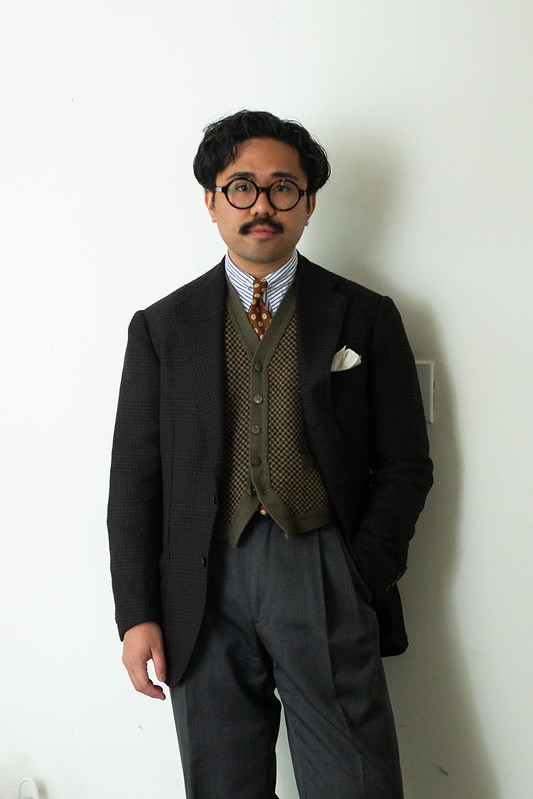
This is why I started getting into vintage (both curated vintage and thrifting) and dabbled into artisanally made clothing (both RTW and custom). Such garments contained the details I desired to help me express my aesthetic goals. The shape of a blunted, droopy lapel, the extended-but-soft shoulder treatment, the moderate button stance, the wide trouser silhouette, specific tie patterns, long unlimited shirt collars– it all worked together. They weren’t arbitrary “nice to haves” nor were they out right required from an external/social perspective (in fact people still think I make weird choices), but I did find them to be a foundational part of how I wanted to appear. It’s like needing a specific type of spice to achieve the flavor I wanted or even the right computer build to get games to run properly.
If I was serious about my desire to seriously pursue my vision of a slouchy, harmoniously proportioned look that harkens a bit to vintage styles, I knew that some garments lacked the expressive properties I needed and some garments did. I would have preferred them all to be as affordable as possible, which is why I did the hunt scouring on eBay on biting the bullet on consignment or affordable custom (with my POV in tact) when needed. These things were only possible through some form of investment (time and/or money). It wasn’t about expensive or old items for bragging rights, but was specifically about getting the details I wanted.
. As you all know, it was worth it. And as a result, I’ve stuck with many of my clothes for a long time (provided I fit into them). I’ve even been able to even allow myself the freedom to expand and experiment with my style. This quality of aesthetic versatility is a testament to their expressive abilities, making them more than worth the investment.


Costs Are Unfortunate, But It May be More Than Money
While I recognize that pursuit of expression is important and shouldn’t be minimized to people being trendy, I admit that I do find it unfortunate that good (expressive) menswear can be seen as expensive.
I find that it’s a similar sentiment to how William Morris, one of the figureheads of the Arts & Crafts movement (that was famously anti-pragmatic) was openly disappointed that his work was only able to be enjoyed by the wealthy (he wrote this essay, which I recommend). Much of this has to do with capitalism and a push for things to be utilitarian, which leaves beauty (and expression) to be an afterthought and leisure, which obviously can mainly be enjoyed by the rich.
To me, much of this is capitalism’s fault, as low cost things are meant to do the bare minimum which often doesn’t include expressive properties. It definitely feels like expressive details are deprioritized and not common from most mass stores. There is a modicum of expression (in order to reference mainstream relevancy), but it’s usually reduced to the lowest common denominator. Modern menswear tends to lack the details that make for “good” outfits, not for the sake of social clout but simply just to have expression to work with.
If we are going to make an analogy to social justice, this is loosely similar to how cheaper food is often unhealthy or how poor people or seniors are relegated to live in food deserts. This isn’t a perfect analogy (and again, wearing “bad” clothes is not the same thing as living a healthy life), but I think that similar capitalist mechanics are at play with menswear (obviously on a much less important scale). It too can even feel like a conspiracy, where mainstream brands seem like they are intentionally making the least expressive garments, which traps men in expressively stale outfits and makes them think that there isn’t more to be done with classic menswear.
This is bother me for a while. I knew that I was lucky enough to get out by acquiring my wardrobe fairly affordably (through eBay, consignment, or affordable MTM like Fugue) or by being in Los Angeles where there is a good amount of vintage (though not much in terms of ivy-trad/prep). It still took a lot of effort, but it was worth it to be free of the current state of menswear. And despite my unease about the general costs of good menswear, I realized that this wasn’t always the case. Through discerning effort, it was definitely possible for others to achieve expression without necessarily paying what a Styleforum guy would. That is why I wrote the blog.
Of course, that doesn’t help my other concern about developing the taste for expression, which personal expression (attitude, vibes) all come into play. It is hard to explain the merits of being slouchy and how styling can achieve it when it depends on a historical interest in clothing as well as an emotional connection utilizing expression. Such things are inherently nebulous and take time, introspection, and tangible experience.
Many guys still rely on being directly told what to buy and expect some sort of short cut to getting an expressive fit. To me, the more unfortunate part is about helping such guys see the value in expression, to see the expressive merit of certain garments, and to be patient in trying and acquiring clothing. I used to think that beginners (or those looking to expand their style) were fated to have this internal struggle. In a world that pushes for pragmatism and sterile expression (at least in mainstream stores), it can be hard for someone to expand their mind.
As I’ve been thinking about this topic for the past few years, I’ve realized that the world has changed. People of all approaches are crying out for expression, sharing that they don’t want to be stuck with stale garments just because it’s at the mall. They are finding their own way to achieve expression, whether that’s saving up, hunting for vintage, buying archive, starting their own brands, or trying to change existing brands from the inside.
It’s all getting good.


The Promising Present and Future
Love or hate it, the rise of niche subcultures that are able to sustain themselves without open ridicule has allowed people to dive into what they enjoy without fear. And as a result, people are demanding more expression from retailers and brands. Thankfully brands are responding, with brands (old and new) delving deeper not only in terms of details but to actively think about colors, silhouette, merch, and even mixing formalities and folding aesthetics (like sportswear, westernwear and the 1970s) into a merger.
J. Crew and Todd Snyder are good examples of existing brands keeping up with the zeitgeist, as their designs have pivoted away from sterile, agnostic clothing in favor of something expressive, both in their silhouettes and their styling of rugged and “formal” pieces. The best part is that this is meant to be inviting.
In an interview with GQ, J. Crew creative director said: “I just like the idea of making really good clothing, and educating people to use those products however they see fit. If you want to take the Giant-fit chino as a really good example—you could literally dress a Bernie Sanders character in those pants, and it would be totally on-point and accurate. [You could dress] some older gentleman from Massachusetts, or Vermont, or Maine—who only wears chinos in their original form, which was quite baggy—and then you could take that guy’s grandson and put him in the same pants, and he would look totally different. He’s wearing a different shirt, he’s got a skateboard in his hand or whatever, but it’s the same pants.”
That expressive versatility is something we’ve been missing during the aughts and 2010s.


It’s also very clear that vintage had a big surge during the pandemic, being a low cost way to achieve expressive clothing without spending much money. People constantly find dupes of current designers by buying vintage, which comes full circle since people are referencing vintage more than ever in their designs. In any case, the rise of vintage allows people from all backgrounds to opt into menswear where they fit best and look good. In my case, it’s almost as if those who spent their time buying vintage are finally “toe-to-toe” with current dressers due to those aesthetic similarities. We don’t need to be jet setting around Europe to look good; we can do it with what we have, right here at home.
Granted, there was a bit of a snag in this development as reselling (or archive selling) hit a peak with sellers (some of them the brand themselves) charging exorbitant amounts of money, but this was thankfully abated by more community focused groups like countless flea markets or Alfargo’s. I bring them up again because members of that group sell great, expressive menswear while keeping it largely affordable for those looking to experiment or even just to get started. And thanks to many of them comprising the new guard in NYC menswear, there’s also been the ability to include brand names in their repertoire (both through vintage and contemporary items), bringing them to a new audience in an accessible way.
I haven’t been able to make it out there for one of those events (they never seem to pick a weekend when I’m actually in NYC), but it seems like a very wholesome and welcoming place. Being inclusive is a great way for menswear to combat the social barriers of getting into this whole thing. In other words, with a better social environment and affordable avenues to clothing, it makes this whole thing much easier to opt into (for fun).
Perhaps if I was born just a little bit later and had my journey as this was happening, perhaps I wouldn’t have had to spend money and time on getting vintage or working with Atelier Fugue to get my suits just right. But maybe I wouldn’t have formed the strong taste that guides me today.
Obviously this recent movement in menswear could just be seen as a trend (the singularity definitely exists), but we can’t deny that this phenomenon has certainly set the stage for a better approach to menswear for everyone. It’s much easier (and cheaper) to get a slouchy suit in 100% organic materials or find a goodyear welted shoe that isn’t just Alden in today’s age. The variety of garments (old and new) in addition to the positive community has truly made now the best time to get into menswear. We can now delve deep into expression and execute it with unprecedented ease.
I want to iterate that all of this would all be bolstered by livable, higher wages. Obviously this something that this (along with universal healthcare and a shit ton of progressive ideals) would make life better better across the board.
For something silly and narcissistic like menswear, the benefits are no brainer, as this will not only allow people to achieve high quality and expressive clothing. On a similar level, we must fight for leisure and other progressive goals for workers of all kinds. We must be liberated from constricting pragmatism that plagues our capitalist society, both in wages and our rapidly decreasing social/personal time. It’s no wonder that so many people are concerned about menswear as a hobby, considering it a waste as it is unable to be utilized at work without perceived detriment. This would also explain how people use menswear to get into the influencer circuit, which tends to prioritize pragmatic, money/engagement driving methods of wearing clothes.
Ferdand Léger has written plainly about reclaiming leisure for the sake of the arts, both for enjoying them and to produce more potential artists. In The Human Body (1945), he mentions what shame it is that museums close when workers clock out. Art and The People goes further when Léger says “don’t start assuming that The People don’t care […] He has taste. He must be permitted to develop. this taste.” Léger’s sentiments are progressive. And it goes without saying that I would definitely apply this to menswear.
If we are critical about how we are being locked out from accessing expressive clothing, we are also being locked out from the ability to execute our desired expressions. It is no wonder why men have a fear of “wasting” time on menswear (or any intentional form of dress). Wages and leisure are inherently tied, which is why we need to push to achieve both of them.
Obviously liberation has more boons than just the [yet totally important] activity of getting dressed. Just think about being free to explore other areas of expression by being able people to take art lessons or learn an instrument as you are able to make enough to live and experience life comfortably.
That’s why an Expressive Life is really the main theme behind my blog. And while we are still a far way off from that ideal future, it is quite clear that menswear has certainly changed and continues to change for accessibly expressive future. The menswear gate has been the most open its ever been.
Come on in!


Thanks for reading! Don’t forget that you can support me (or the podcast) on Patreon to get some extra content and access to our exclusive Discord.
Always a pleasure,
Big thank you to our top tier Patrons (the SaDCast Fanatics), Philip, Shane, Henrik, and Alexander.
 a little bit of rest
2 comments